

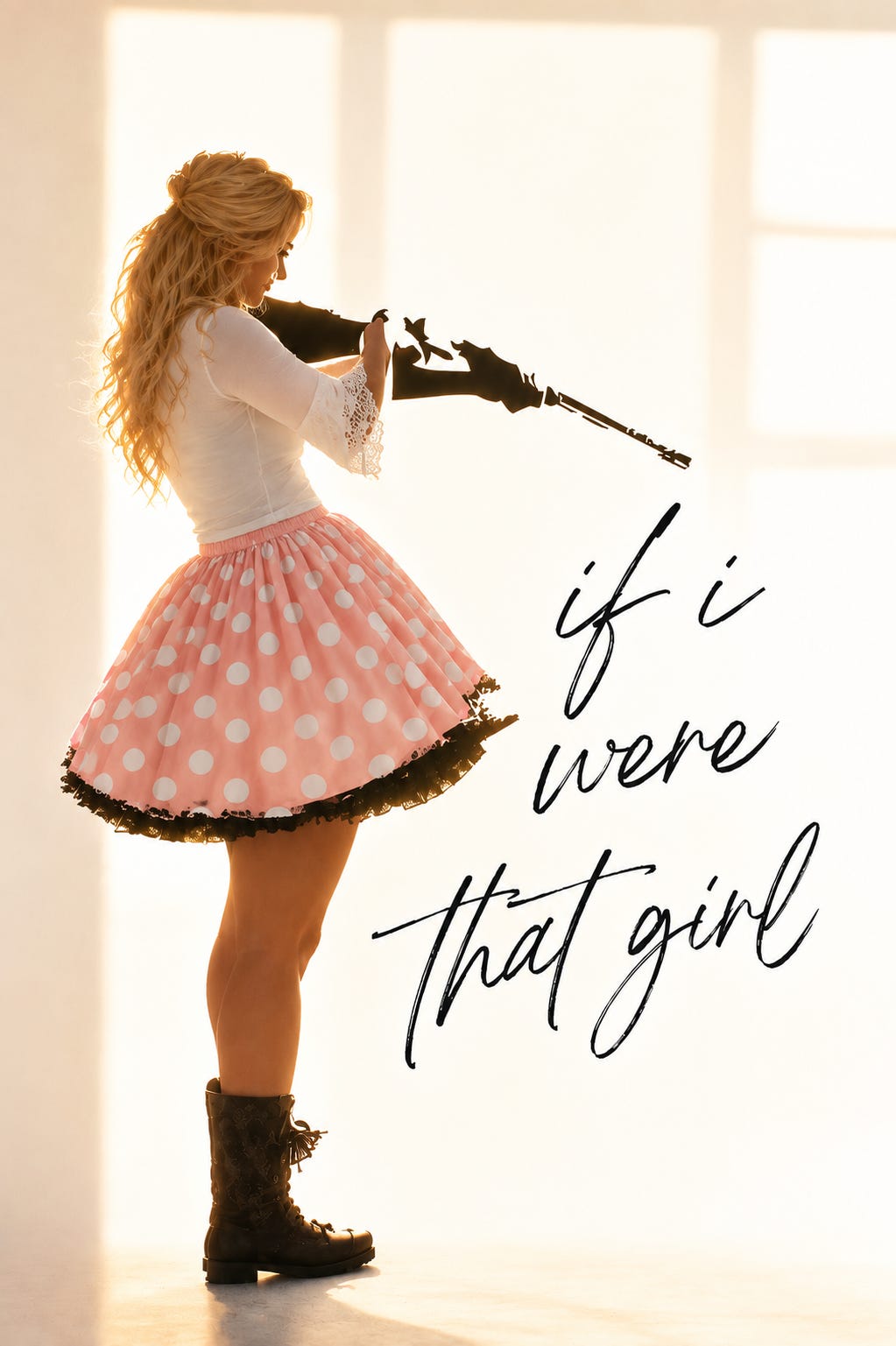
If I were that girl,
when his Silverado
screeched down
the gravel driveway,
I’d lock all the doors,
pile the dining chairs
in front of them
and any other
movable furniture
I could find.
If I were that girl,
I’d act quick,
take apart
the dresser drawers
and use the plywood
to board up
the windows
from the inside.
When he stumbled
back home
from Titties Beer Bar
and began banging
on the kitchen door,
screaming,
“Bitch, let me in!”
I’d turn up
the Chicks’ Goodbye Earl,
light a cigarette,
pop open
a six-pack
and sing along:
Earl had to die.
When he went back
to his truck
to get the Remington
you gave him
for Christmas
and began shooting
at the kitchen door,
I’d take another sip
of beer
and cock my Ruger,
aiming it straight
at the door.
When he cried,
“I’m sorry, baby,”
that he “loved you,”
that he didn’t mean to
slam your head twice
against the credenza
Aunt Millie gave you
as a wedding present,
I’d think about
what love is
and ain’t,
and all the other times
he said
the same damn thing.
When he said
he would never
“do it again, baby,”
I’d try not
to put down
the rifle,
try not
to check my appearance
in the refrigerator door,
try not
to wipe the blood
off my face.
I’d try not
to open that door,
forgive him,
and run into his arms
like what he did to me
was okay,
like my bloodied eye
and broken teeth
were okay,
forgivable.
If I were that girl,
I’d try …
That final “I’d try” changes everything. Until then, we can believe we know what we would do, which doors we would keep closed, which words we would no longer believe. Then only “try” remains. Perhaps that is where judgment from the outside should stop: at the distance between knowing what someone should do and actually living inside their fear.